
Welcome to Stupava
Stupava – a town in Záhorie
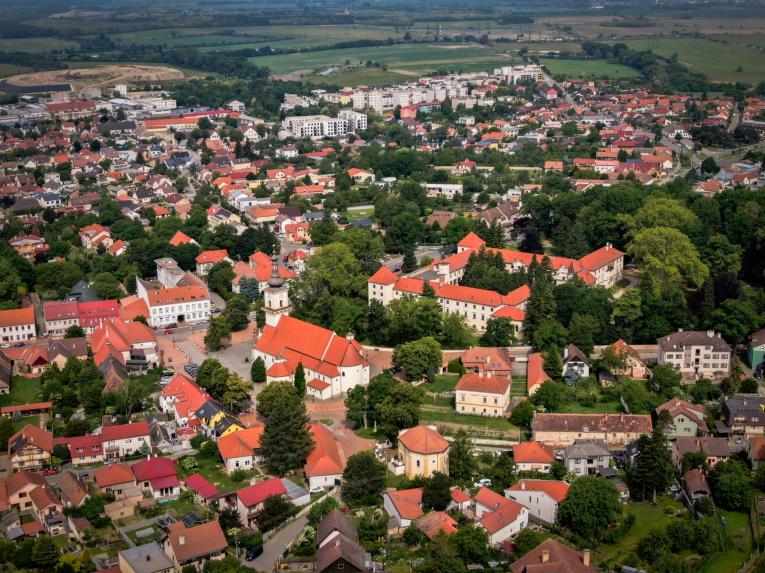
Thanks to its excellent location and natural and cultural wealth, Stupava is one of the most visited towns and villages in Záhorie region. It is located in the immediate vicinity of nature reserves, cycle paths and hiking trails, which attract numerous tourists and cyclists in every season. To the east, the town borders the Little Carpathians and the popular Pajštún Castle. To the west, the border forming river Morava flows in picturesque curves, lined with rare wetlands and floodplain meadows.
First written mention
Stupava is mentioned for the first time in writing in a document from 1269. A content analysis of this document in the context of reports in other documents from this period indicates that it is a forgery. The document from 1271 is considered to be the first reliable written record of Stupava. Material evidence of the settlement of this territory is much older, the territory has been continuously inhabited since the Neolithic period. Conquerors and warriors alternated here with craftsmen and farmers, who built their homes here and improved this piece of land.
Celts, Romans, and Slavs
The Stupava region was already inhabited in the Bronze Age. The first ethnically known inhabitants were the Celts. Later, this territory became a barbarian neighbourhood of the Roman Empire. When conquering Europe, the Romans stopped by the middle area of the river Danube’s flow. The province of Pannonia was established in the occupied territory. Of the present-day territory of Slovakia, only the Transdanubian part of Bratislava was part of it. They also built several military camps and civilian buildings on the other side of the river.
They paid particular attention to securing the border zone called Limes Romanus. The first place on the Slovak shore of Danube that the Romans occupied was probably Devín. The first Roman legionary set foot here already in the time of Octavian Augustus. The activity of the Romans increased significantly during the so-called Marcomannic Wars (160–180 AD). At that time, a large fortress in Iža near Komárno and a smaller station in Stupava were probably built. They built it on a low hill, on which a Germanic settlement had already stood before. They chose the place due to its strategic location on the route of the important trade Amber Road. From the fortress, they controlled a large part of Záhorie and the Bratislava Gate.
If necessary, they were able to establish visual contact (e.g. by smoke signals) with Carnuntum, about 30 km away. A large courtyard was created here, protected by a 70x70 meter perimeter wall. In the center stood a command building with 20 rooms and a central courtyard - an atrium. The stay of the legionaries is evidenced by findings of weapons, remains of chain mail. "Civil" life is documented by ceramics, jewelry, coins, fragments of glass containers and farm tools. The station is currently closed and no part of the preserved architecture is presented in the field. The site has been declared a national cultural monument since 1963.
This was followed by permanent settlement by Slavs, as evidenced by the findings of a Slavic burial ground with ceramic objects from the 6th - 9th centuries. The burial ground is located in the Mást district of the city. Research into the burial ground demonstrates not only the level of early medieval material culture and craft level, but also the social and societal differentiation of society. According to the ceramics and funeral rites, it is evident that these were Slavic populations without the intervention of Old Hungarian elements in their material culture, which continuously survived even after the arrival of the Hungarians in the middle Danube region.
Tradition of jug making
In the past, Stupava was an important town, in addition to agriculture and viticulture, its inhabitants were also engaged in various crafts and trade. Stupava's greatest fame was brought by jug making, carried out exclusively by 2 families- Putz and Kostka for almost 250 years. The line of important jug making masters was closed in 1951 by the national artist Ferdiš Kostka. The Ferdiš Kostka Museum, which is administered by the Bratislava Self-Governing Region, is currently closed to the public and is awaiting its reconstruction. The tradition of making faience dishes was preserved in the authentic environment of the original jug making workshop. Its equipment, tools and ancient horizontal kiln for firing ceramics are unique in Central Europe.
Trade and crafts were supported by important annual markets, which were visited by sellers and buyers from the surrounding area. The fertility of the fields and gardens ensured livelihood and seasonal financial betterment for farming families. Root vegetables, cucumbers and cabbage, thrived in the region and it was sold by farmers at markets in nearby Vienna and Prešpork. High-quality apples and cherries from the Stupava orchards were also in demand in large cities.
Christian sacral buildings
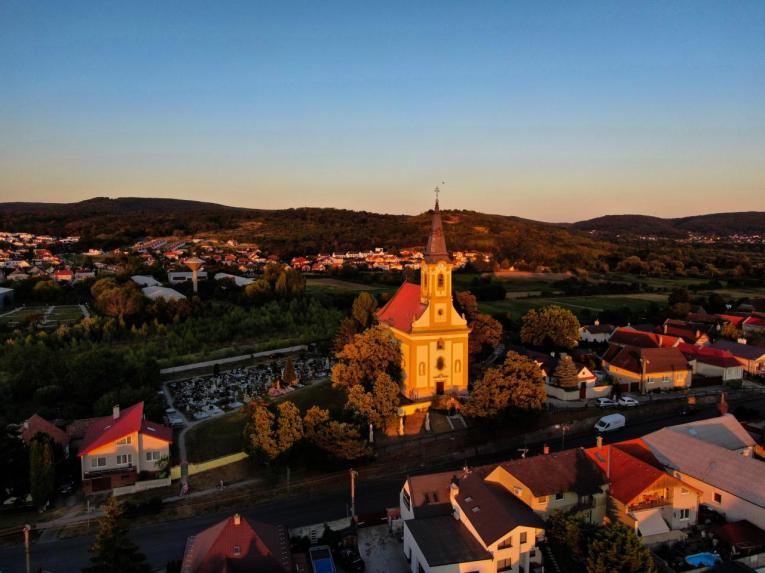
Among the significant sacral monuments of Stupava is the Church of St. Stephen, originally a Renaissance church from the first half of the 17th century, probably built on the site of an older church. In the years 1764-1767 it underwent a significant reconstruction, during which it was expanded with side naves and chapels. Above the entrance is a statue of the patron saint St. Stephen the King, complemented on the sides by statues of the Immaculate Virgin Mary and St. Ladislav. Under the church is a crypt from 1707.

Another notable building is the Church of St. Sebastian, an early Baroque temple built in 1701 in the then village of Mást, which was renovated and expanded in 1749. The alliance coat of arms of Pavel Pálffy and Mária Khuenová has been preserved above the portal, the main altar dates from 1743 and the facade is decorated with statues of St. Sebastian and St. Roch from 1906. Below the church is the Chapel of Our Lady of Lourdes from the same year.
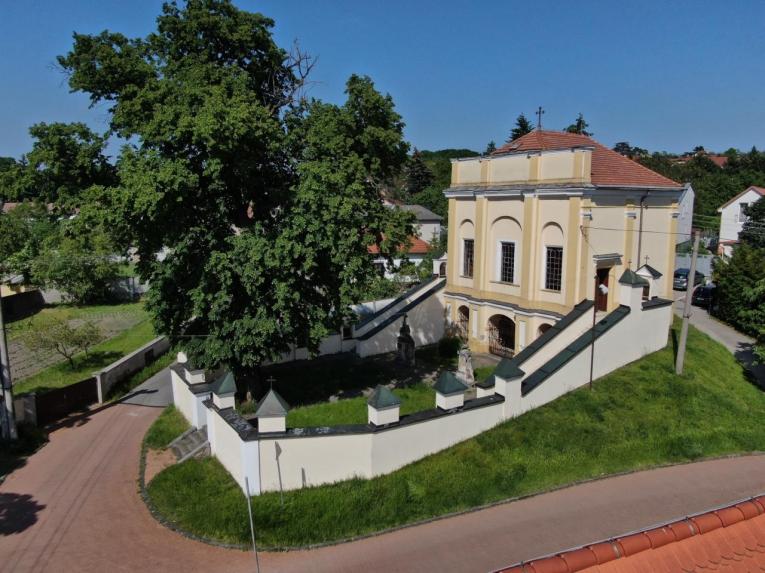
The third significant sacral object is Calvary, which originally consisted of three wooden crosses with figures of Christ and two thieves. After the city fire in 1709, only the middle cross with Christ remained undamaged, which the locals considered a miracle. In memory of this event, the early Baroque Chapel of Christ the Sufferer was built in the years 1709-1713, which is now complemented by a brick enclosure with pillar chapels of individual stations.
Jewish Community in Stupava
The Jewish community in Stupava is one of the oldest in today’s Slovakia; its origins date back to the 17th century and the community played an important role in the economic and cultural life of the city. The dominant feature of the historical Jewish presence is the synagogue from 1803 — one of the few preserved nine-vaulted synagogues in Slovakia, which gives it exceptional architectural and cultural-historical significance. Since 2006, the non-profit organization JEWROPE has been dedicated to the rescue and revitalization of the Stupava synagogue. Thanks to them, the synagogue is now a valuable space, occasionally used for cultural and social events.
The Stupava Jewish Cemetery is one of the largest and most precious in Slovakia, located between Pri Borníku and Debnáreň streets. Its history dates back to the 17th century and hides hundreds of tombstones with unique artistic and historical value. The relief-decorated tombstones bear mostly Hebrew inscriptions, but we can also find German texts here. The cemetery is a place of reverence with a special atmosphere, where important figures of the Jewish community rest.
The Jewish community was one of the most numerous communities in Záhorie, reaching its peak in the first half of the 19th century (in 1828, about 819 members, approximately a quarter of the city's population), but in the 20th century, especially during World War II, the community was significantly decimated.
Not only skilled businessmen, but also respected scholars and prominent personalities emerged from its ranks. Among them are the world-famous theater director Max Reinhardt and the director of several European theaters, Angelo Neumann.
Stupava Castle and its Park
The history of Stupava is inseparably linked with the leading noble family of the Pálffys, whose members determined its development for almost three centuries. The Károlyis continued to improve the town, the Stupava castle and the park.

According to written sources, a smaller manor house stood on the site of today's castle in the 16th century. At that time, it also included fruit gardens, one of which was located by the manor's mill (now a non-functional artificial waterfall), the other by the now defunct brewery. When the manor house was rebuilt into a Renaissance castle in the mid-17th century, the garden certainly underwent a representative renovation, but its appearance is unknown to us nowadays. However, the name of the oldest known manor gardener has been preserved, in 1670 he was Filip Kaser.
The subsequent Baroque renovation of the manor garden from the mid-18th century was captured by a site plan stored in the Pálffy archive. The Renaissance defensive moats around the manor were rebuilt into ornamental gardens with two fountains. The area east of the manor, in the place of today's pond, was renovated into regularly bordered ornamental flower beds in the French style. The manor's Baroque garden also included a riding school, two smaller greenhouses, a mill and apartments gazebo for the manor's gardener, forester and carpenter. After the Stupava estate changed gazeboownership in 1867, the new owner, Count Alojz Károlyi, had renovated not only the manor house but also the nearby manor garden. In the second half of the 19th century, the garden was transformed into a landscape park in the English style. The marshy water area east of the mansion was transformed into a lake with stone banks and an artificial island.
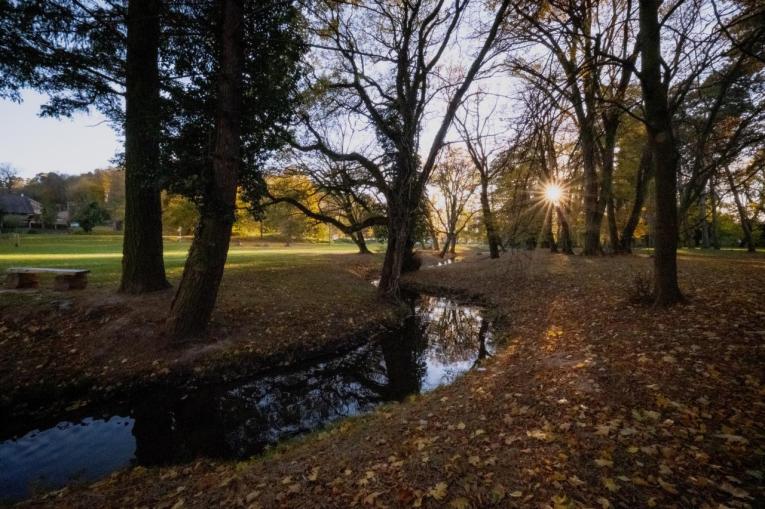
The total park area was significantly expanded and supplemented with new non-native trees. Sensitively composed picturesque vistas were created in the park, providing harmonious groups and solitary trees of various kinds, combined with grassy areas. The maintained park environment freely passed into the forest stands around Pajštún Castle, where a menagerie was established and maintained at great financial expense. In the first half of the 20th century, the park contained several economic buildings - a brewery, a cooperage, a laundry and a mill- the only one of which has survived to this day. Two streams flowed through the park and fed artificial lakes. The torso of a gazebo with an access road originally lined with an alley of horse chestnuts has been preserved on an elevated spot near the football stadium.
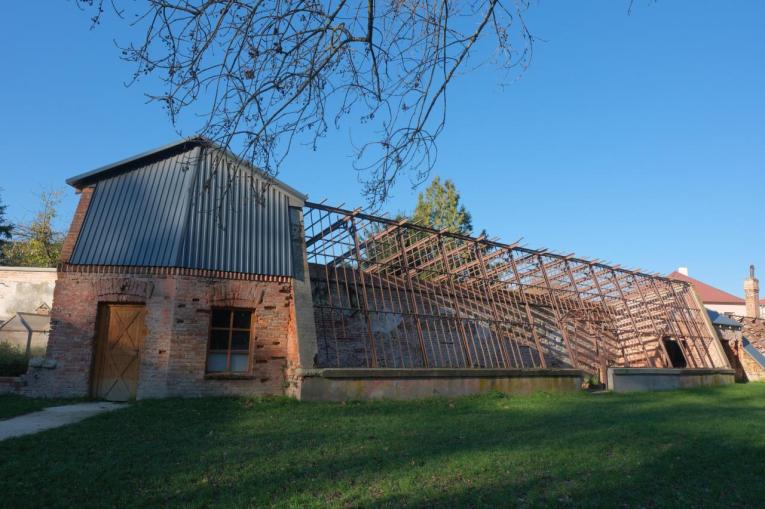
The old Baroque greenhouses probably no longer existed at this time. Count Károlyi had a new three-part heated greenhouse with a boiler room built at the end of the 19th century. It was used to grow flowers, seedlings and overwinter tropical flowers. Since 2022, the greenhouse has been partially renovated and is open to the public. The revitalization of the Small Park and the reconstruction of historical buildings was supported by the Interreg AT-SK program and included the stabilization of the steel structure of the greenhouses and the restoration of the gardener's house according to historical photographs. The project was awarded for the exemplary restoration of historical greenhouses and the Krupička House in Stupava. Today it is the backdrop for the Stupava Ecocenter.
The historic greenhouse is a uniquely preserved monument of its kind in Slovakia. It consists of a cast iron structure placed on a retaining wall and a brick platform, the glazed curved surface is oriented towards the south. The structure was filled with rectangular glass panels, the cast iron structure included an entrance door and ventilation tilting windows.
According to historical photographs and postcards, palm trees overwintered in large wooden flowerpots in the greenhouse. The temperature in the greenhouse was regulated by the manor's gardeners with roll-up shade mats and wooden boards placed on the outside of the glass surface. In the summer, exotic palm trees beautified the edges of the paths between the eastern wing of the mansion and the pond.
The last manor gardener in the service of Count Ľudovít Károlyi was Jozef Krupička (1874 – 1948), son of the chief gardener of count Pálffy in Malacky. In the autumn of 1927, he organized a three-day exhibition of fruits and vegetables in the greenhouses. According to a newspaper report, vegetables of all kinds of surprising quality were exhibited, as well as flowers, including beautiful, massive palm trees, begonias and orchids, which formed the framework of the entire exhibition. The most beautiful was said to be the fruit exhibition, which was complemented by a display of processed and preserved fruits and vegetables. The exhibition was viewed with great interest by about 2,000 visitors at that time.
Stupava Park with rare trees is one of the most beautiful in the Bratislava region, one of the most admired trees are the massive western plane trees. Despite insensitive construction interventions in the past half century and insufficient maintenance, the park is a bearer of rare cultural and historical values. It was entered into the list of cultural monuments together with the manor house in 1963, and is currently a national cultural monument, registered in the Central List of Monuments.

